Calcium carbonate for municipal wastewater: beyond pH control

Alkalinity sources for activated sludge systems and why calcium carbonate is gaining attention.

Aerial view to sewage treatment plant. Grey water recycling. Waste management in European Union.; Shutterstock ID 1444479641; purchase_order: Life Science; job: Life Science; client: Life Science; other: Life Science
Share

Municipal wastewater treatment plants use different alkalinity sources to compensate for alkalinity consumed during nitrification and chemical phosphorus removal. However, the chemicals selected do not deliver the same operational outcome. Caustic soda, lime, magnesium hydroxide and calcium carbonate differ in reaction behaviour, buffering capacity, handling requirements and their wider effects on the activated sludge process. The relevant question is therefore not simply: How quickly can the chemical raise pH? It is: Which alkalinity source best supports the plant’s treatment objectives?

Start with the treatment objective

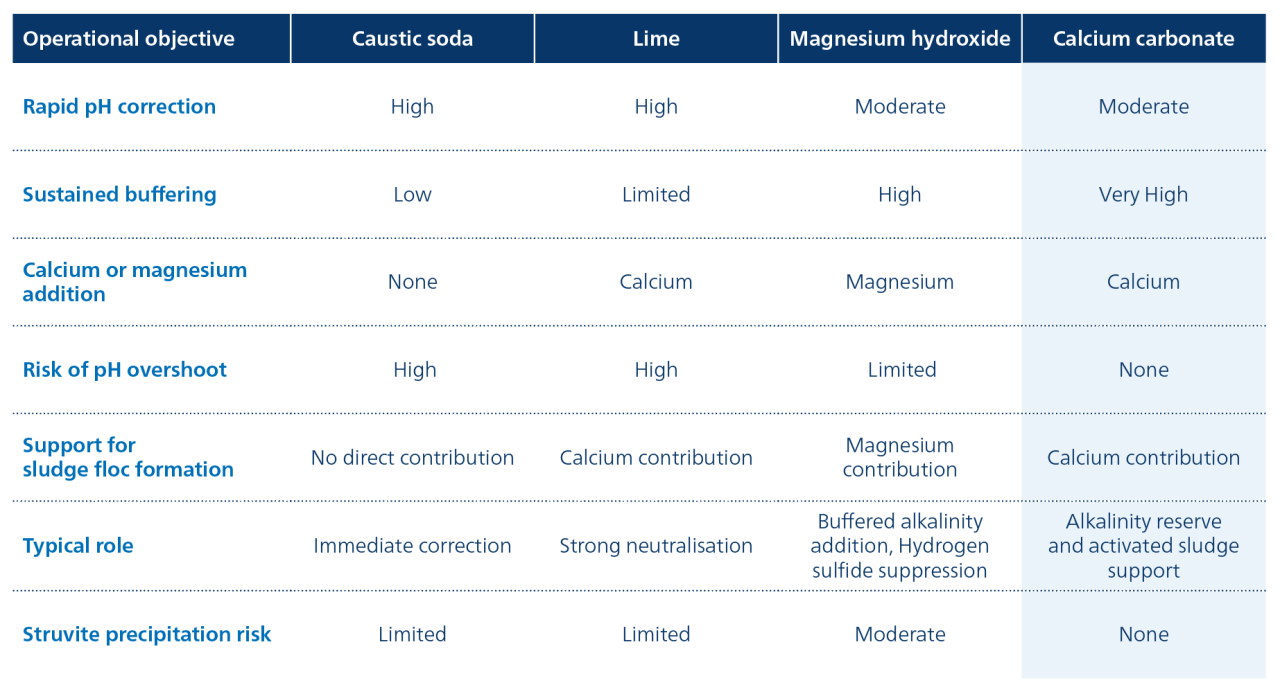
Plants requiring immediate pH correction may prioritise a fast-reacting alkali. Plants operating biological nitrogen removal processes may instead need sustained buffering to protect nitrification as ammonia loading, influent alkalinity and chemical phosphorus removal vary. The following comparison provides a practical starting point.

Alkali comparison

All four solutions can increase alkalinity, but they do not work in the same way. The distinction between rapid correction and sustained buffering is important. Caustic soda and lime may be appropriate when immediate neutralisation is required, e.g. for adjusting the pH in coagulation tanks or pipe flocculators. In activated sludge systems, however, correcting a pH reduction after it occurs may not provide the same process protection as maintaining a sufficient alkalinity reserve. This is where calcium carbonate offers a different approach.

Why calcium carbonate behaves differently 

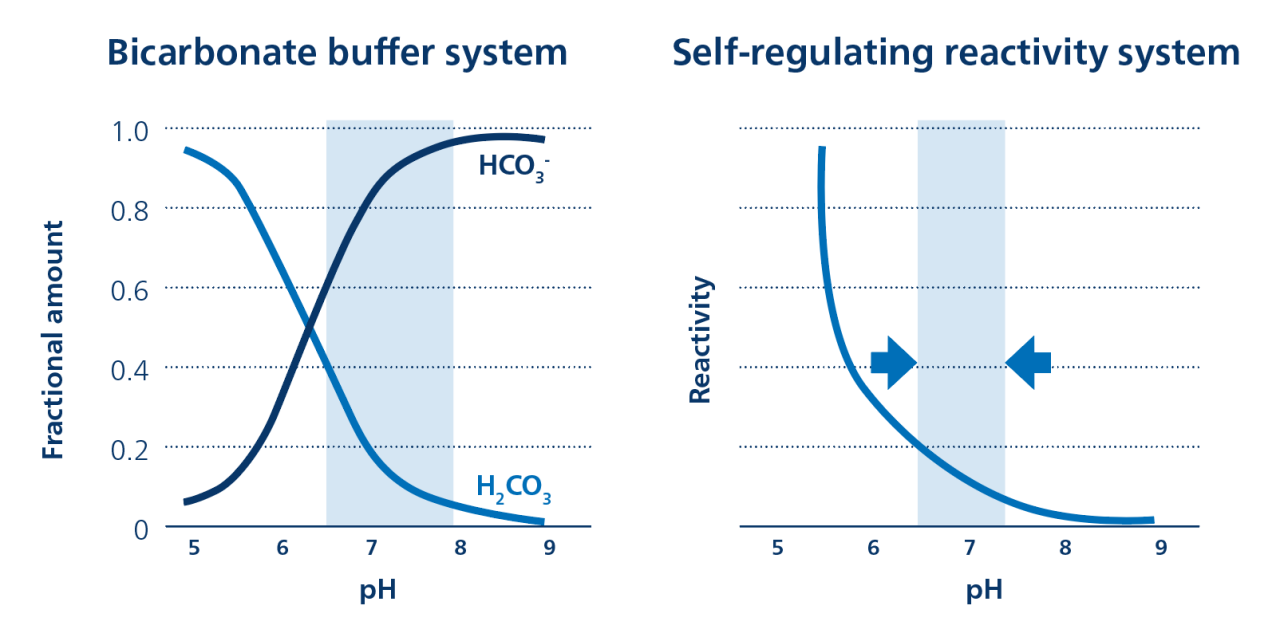
Calcium carbonate becomes more reactive as acidity develops. Rather than providing only rapid pH correction, it acts as an alkalinity reserve, releasing buffering capacity when nitrification and chemical phosphorus removal increase alkalinity demand.

The figure highlights why calcium carbonate should not be evaluated only on how quickly it raises pH. Its value lies in maintaining buffering capacity within the biological operating range and helping protect the activated sludge process from pH fluctuations. This approach can be particularly relevant where plants experience:

  • variable ammonia loading;

  • increased ferric or alum dosing;

  • low influent alkalinity;

  • seasonal load variations; or

  • recurring pH instability.

Beyond alkalinity

Calcium carbonate provides more than buffering capacity. The calcium it contributes can promote the formation of larger and denser sludge flocs, supporting improved settling, dewatering and overall sludge control. Omya's technical literature also highlights improved process stability, enhanced conditions for nitrifying bacteria and better dewatering performance as key benefits of calcium carbonate in activated sludge systems. As nutrient removal requirements become more demanding, many municipal wastewater treatment plants are evaluating calcium carbonate not simply as an alkalinity source, but as a way to support overall activated sludge performance.

Omya solutions for alkalinity management 

Omya Optical is a high-purity calcium carbonate solution designed for activated sludge systems. By combining alkalinity replenishment, long-lasting buffering and calcium addition, it supports stable nitrification while helping improve sludge settling and dewatering performance. It acts as an alkalinity reserve and contributes to the formation of larger and denser sludge flocs.

Omya Neutrasorb Mag is a high-purity magnesium hydroxide solution used for alkalinity management where hydrogen sulfide (H₂S) control is also an important operational consideration.

For activated sludge systems, the choice of alkalinity source is not only about raising pH. Buffering capacity, biological stability, sludge performance and site-specific process objectives should also be considered. Calcium carbonate and magnesium hydroxide each provide different operational benefits, making the most suitable solution dependent on the needs of the treatment process.

Looking to optimise alkalinity management and activated sludge performance? Contact our wastewater treatment experts. 

Curious to expand your knowledge?

Click here to read more and stay updated with the latest articles!